Curriculum
Ncert - Class 11- Computer Science
Chapter 1 : Computer System
0/3

Chapter 2 : Encoding Schemes and Number System
0/2
Chapter 3 : Emerging Trends
0/2
Chapter 4 : Introduction to Problem Solving
0/2
Chapter 5 -Getting Started with Python
0/4
Chapter6 - Flow of Control
0/1
Chapter7-Functions
0/1
Details Notes – 1- Chapter 3 : Emerging Trends
3.1 Introduction
- Computers continually evolve, driving emerging trends in technology.
- Understanding these trends is crucial for navigating the digital economy and societal interactions.
3.2 Artificial Intelligence (AI)
AI mimics human intelligence in machines, enabling tasks like speech recognition and decision-making.
Subfields like Machine Learning and Natural Language Processing (NLP) empower systems to learn from data and interact using human languages.
3.2.1 Machine Learning
- Computers learn from data without explicit programming, making predictions and decisions autonomously.
3.2.2 Natural Language Processing (NLP)
- Facilitates human-computer interaction through spoken languages, enabling tasks like predictive typing and speech-to-text conversion.
3.2.3 Immersive Experiences
Immersive technologies like Virtual Reality (VR) and Augmented Reality (AR) enhance user experiences by simulating real-world environments or overlaying digital information.
3.2.3.1 Virtual Reality (VR)
- Creates immersive, interactive experiences by simulating three-dimensional environments.
3.2.3.2 Augmented Reality (AR)
- Enhances real-world environments by overlaying digital information, offering interactive experiences and real-time information access.
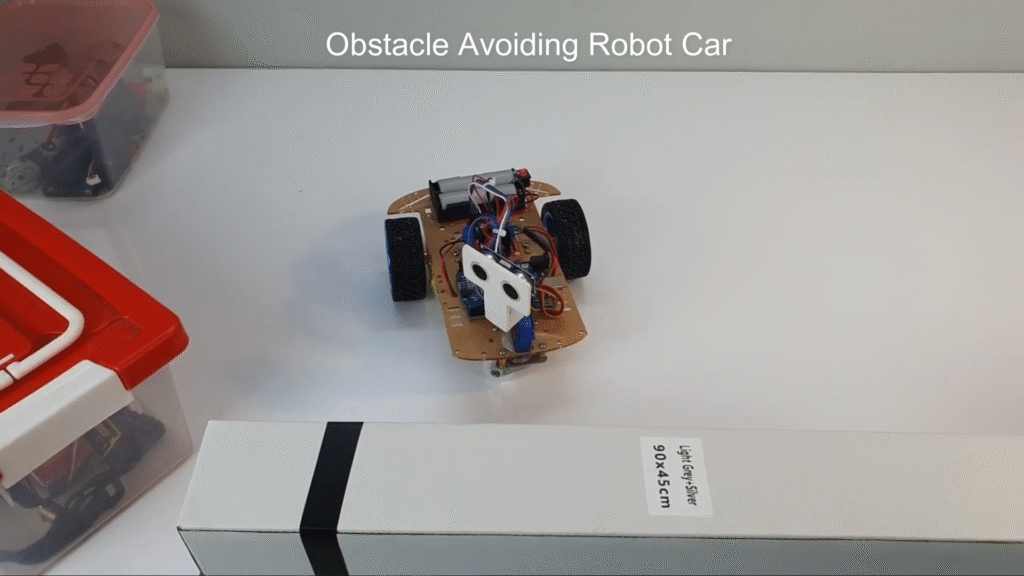
3.2.4 Robotics
Robots automate tasks with precision and accuracy, finding applications across industries.
Humanoid robots and drones serve diverse purposes such as research, healthcare, and disaster management.
3.2.4.1 Humanoid Robots
- Resemble humans and perform tasks using artificial intelligence and sensors.
3.2.4.2 Drones
- Unmanned aircraft used for various purposes like aerial photography, disaster management, and wildlife monitoring.
3.3 Big Data
Introduction:
- Data generation rates are soaring due to widespread technology adoption.
- Daily data creation exceeds 2.5 quintillion bytes, fueled by IoT advancements.
- Big Data emerges from the generation of large, unstructured datasets.
Characteristics of Big Data:
- Volume: Data size surpasses traditional processing capabilities.
- Velocity: Data is generated and stored at an exponential rate.
- Variety: Data encompasses various formats like text, images, and videos.
- Veracity: Data quality may vary, impacting reliability.
- Value: Data holds valuable insights, necessitating resource investment for processing.
Data Analytics:
Definition:
- Process of analyzing datasets to extract insights using specialized tools.
- Applications: Used in industries for informed decision-making and scientific research.
- Tools: Libraries like Pandas in Python simplify data analysis, enhancing efficiency.
3.4 Internet of Things (IoT)
Introduction:
- IoT expands the concept of computer networks to include everyday devices like bulbs, fans, and refrigerators.
- These devices, equipped with embedded hardware and software, communicate with each other and users over a network.
Web of Things (WoT):
- Simplifies device interaction by integrating various devices into one interface.
- Utilizes web services to connect physical devices, paving the way for smart homes, offices, and cities.
Sensors:
- Accelerometers and gyroscopes in smartphones enable orientation detection.
- Smart sensors, detecting specific input and performing predefined functions, are crucial for IoT evolution.
Smart Cities:
- Challenges faced by cities include resource management, traffic congestion, public safety, and infrastructure.
- Smart city concept integrates IoT with computer and communication technology to manage resources efficiently.
- Smart buildings, bridges, and tunnels utilize wireless sensors for real-time monitoring and proactive maintenance.
3.5 Cloud Computing
Introduction:
- Cloud computing delivers computer-based services over the Internet or the cloud.
- Users can access these services from anywhere using any device.
- Services include software, hardware (servers), databases, storage, etc., provided by cloud service providers.
- Users pay for cloud services on a pay-per-use basis, similar to utility billing.
Cloud Services:
- Infrastructure as a Service (IaaS):
- Provides computing infrastructure such as servers, virtual machines, storage, and network components.
- Users can deploy and execute software applications on remote hardware infrastructure.
- Offers cost savings by outsourcing hardware and software needs, along with setup, maintenance, and security costs.
- Platform as a Service (PaaS):
- Offers a platform or environment to develop, test, and deliver software applications.
- Users can install and execute applications without worrying about underlying infrastructure.
- Reduces complexity and cost by providing pre-configured environments for application deployment.
- Software as a Service (SaaS):
- Provides on-demand access to application software, typically through licensing or subscription.
- Users can access and use software applications like Google Docs, Microsoft Office 365, etc., without installation or configuration.
- Offers access to configuration settings of the software application being used.
- Infrastructure as a Service (IaaS):
Benefits of Cloud Computing:
- Cost-effective: Users pay for resources on-demand, eliminating the need for significant upfront investment.
- On-demand resources: Users can access computing resources as needed, scaling up or down based on requirements.
- Accessibility: Services are accessible from anywhere with an internet connection, using any device.
- Simplified management: Cloud providers handle hardware and software maintenance, reducing management overhead for users.
3.6 Grid Computing
Introduction:
- A grid is a computer network consisting of geographically dispersed and heterogeneous computational resources.
- Unlike cloud computing, which focuses on providing services, a grid is more application-specific and creates a virtual supercomputer for large-scale processing tasks.
Constituent Resources:
- Nodes: The individual resources within a grid network, ranging from handheld mobile devices to personal computers and workstations.
- These nodes come together temporarily to solve large tasks and achieve common goals, leveraging their combined processing power and storage capabilities.
Types of Grid:
- Data Grid: Manages large and distributed data with multi-user access.
- CPU or Processor Grid: Handles processing tasks by distributing them across multiple nodes for parallel processing or moving processing from one PC to another as needed.
Comparison with Cloud Computing:
- Grid computing involves multiple computing nodes collaborating to solve computational problems, unlike Infrastructure as a Service (IaaS) cloud services where users rent infrastructure from a service provider.
- In grid computing, a middleware is required to implement distributed processor architecture and connect numerous nodes in terms of data and CPU.
Middleware and Tools:
- Middleware, like the Globus toolkit, is used to set up grids by providing software for security, resource management, data management, communication, fault detection, etc.
- The Globus toolkit is open-source and facilitates building grids efficiently.
3.7 Blockchains
Introduction:
- Traditional digital transactions are stored in centralized databases, posing risks of hacking or data loss.
- Blockchain technology operates on the concept of decentralized and shared databases, where each computer has a copy of the database.
Components:
- Blocks: Secured chunks of data or valid transactions, each containing a header visible to every node and private data accessible only to the owner.
- Blockchain: A chain formed by linking these blocks together, ensuring security and integrity of data.
Functionality:
- Blockchain allows a group of connected computers to maintain a single, updated, and secure ledger.
- Each participating node receives a full copy of the database and maintains an ‘append-only’ open ledger, updated only after network-wide authentication of transactions.
Applications:
- Digital Currency: Most popularly used in digital currency transactions, providing decentralization, openness, and security.
- Business and Governance: Ensures transparency, accountability, and efficiency in various sectors such as healthcare, land registration, voting systems, banking, media, telecom, and travel.
Examples:
- Healthcare: Facilitates better data sharing among healthcare providers for accurate diagnosis and cost-effective care delivery.
- Land Registration: Prevents disputes arising from land ownership claims and encroachments by maintaining immutable records.
- Voting Systems: Enhances transparency and authenticity in voting processes by storing all data in a ledger, preventing vote alterations.